Arriving in the Heart of Saudi Arabia
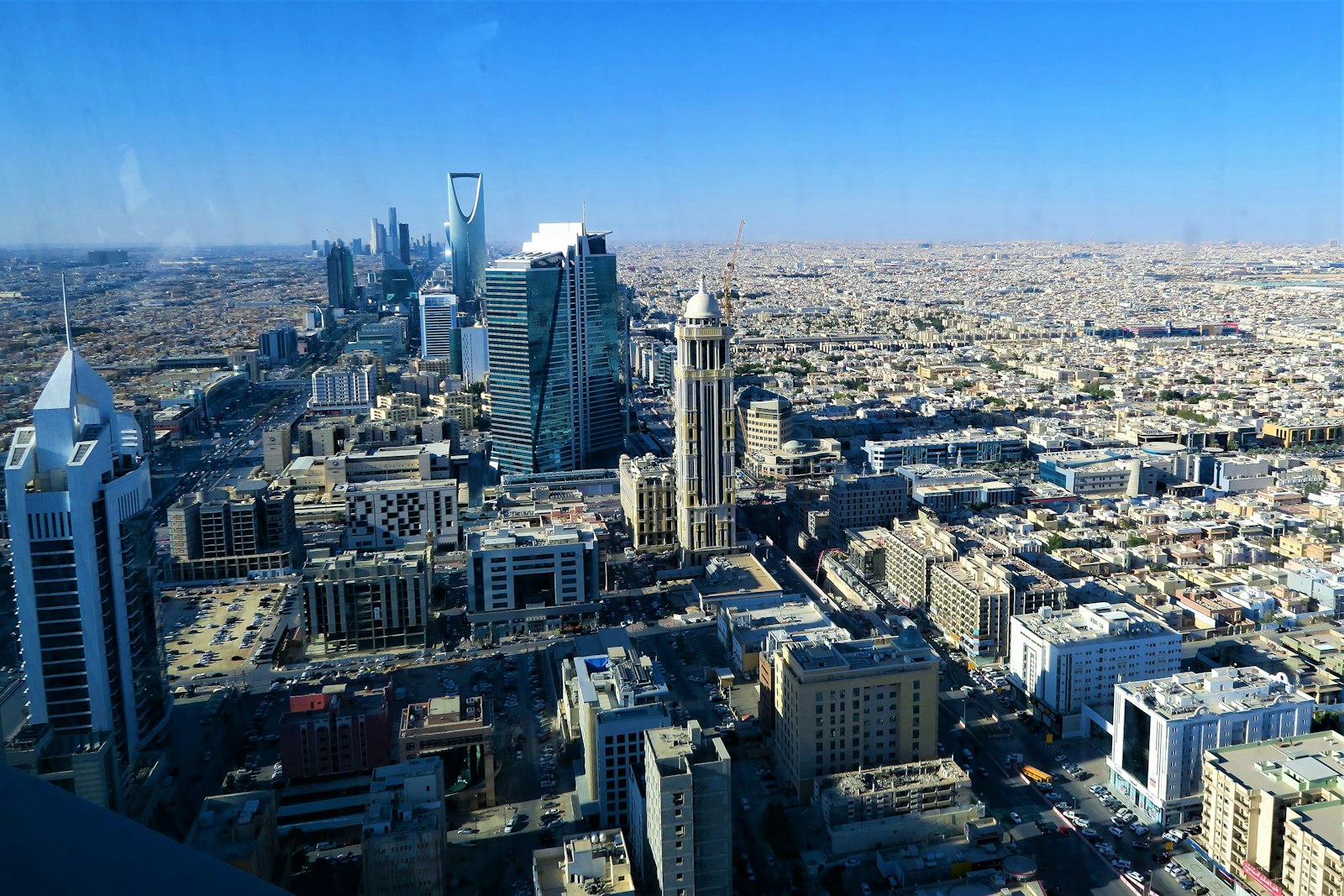
My first impression of Riyadh was noise. After the quiet majesty of AlUla, the capital hit me like a physical force—car horns, construction equipment, the constant hum of a city that seems to be rebuilding itself in real-time. From the taxi window during the ride from King Khalid International Airport, I watched a landscape of contradictions unfold: ultra-modern towers beside buildings that looked half-finished, luxury car dealerships next to traditional souqs, billboard advertisements mixing Arabic and English in dizzying proportions.
Riyadh is home to more than 7 million people, making it one of the Middle East's largest cities. But size alone doesn't capture what makes this place unique. This is the beating heart of Saudi Arabia's Vision 2030—the ambitious plan to transform the kingdom's economy and society. That transformation isn't some distant future; it's happening now, visible in every corner of the city.
Diriyah: Where It All Began
I started my Riyadh exploration where Saudi Arabia itself began—in Diriyah, the ancestral home of the Al Saud family. This UNESCO World Heritage site sits on the outskirts of modern Riyadh, a cluster of mud-brick structures that once controlled trade routes across the Arabian Peninsula.
Walking through At-Turaif district felt like stepping into a history lesson, except this one was written in clay and stone rather than books. The Najdi architecture—thick mud-brick walls decorated with triangular patterns—was designed for the extreme desert climate. My guide, Abdullah, explained how these buildings stay cool even when outside temperatures exceed 45°C (113°F). "Our ancestors weren't just builders," he said, running his hand along a wall. "They were engineers who understood this land."
What struck me most was the juxtaposition. From the ruins of these 18th-century fortifications, I could see Riyadh's modern skyline in the distance—glass towers reflecting the same sun that baked these ancient mud bricks. It felt like witnessing the entire arc of Saudi history in a single view.
Visiting Diriyah
- Open daily except during prayer times; check the official Visit Saudi website for hours
- Entry to At-Turaif district requires a ticket (around 50 SAR for adults)
- Evening visits offer cooler temperatures and beautiful lighting
- Guided tours are available and highly recommended for historical context
- The surrounding Diriyah development includes restaurants and cafes
The Kingdom Centre: Reaching for Tomorrow
If Diriyah represents Riyadh's past, Kingdom Centre Tower represents its ambitions. At 302 meters tall with its distinctive sky bridge, it's one of the city's most recognizable landmarks. I'll admit I'm not usually drawn to skyscrapers—one observation deck tends to look like another—but I made an exception here.
The Sky Bridge, 300 meters up, offers panoramic views of Riyadh stretching to the horizon in every direction. What fascinated me wasn't just the height but what it revealed about the city's structure. Riyadh sprawls massively, a horizontal city where neighborhoods spread like fingers into the desert. From up there, I could trace the city's growth: the older districts near the center, the newer developments pushing outward, and beyond it all, the desert—still visible, still defining everything.
I went at sunset, which turned out to be perfect timing. As the call to prayer echoed from mosques across the city, the sky shifted through shades of orange and purple I'd only ever seen in photographs. Below, thousands of lights began flickering on, transforming Riyadh into a constellation of human ambition. It was beautiful and overwhelming in equal measure.

Edge of the World: Nature's Perspective
About 90 kilometers northwest of Riyadh lies one of the most dramatically named places I've ever visited: the Edge of the World. The Arabic name, Jebel Fihrayn, is less theatrical but the experience lives up to the English translation.
I hired a driver through my hotel because reaching it requires navigating unmarked desert roads—not something I wanted to attempt alone. The journey took about two hours through landscape that shifted from urban sprawl to empty desert surprisingly quickly. One moment we were passing construction sites; the next, nothing but sand and rock extended in every direction.
Then the earth simply ended. The plateau drops away in a sheer cliff face plunging 300 meters down to what was once an ancient ocean floor. I stood at the edge (carefully—there are no railings or safety measures) and understood why people come here. The scale is incomprehensible. Valleys and wadis stretch to the horizon, carved by water that hasn't flowed here in millions of years.
I met a Saudi family there, parents with three kids who'd driven from Riyadh for a day trip. The father told me they try to bring their children here regularly. "They need to remember," he said, gesturing at the vast emptiness, "this is what our grandparents knew. This is where we come from, even as we build all those towers." It was one of those conversations that stays with you, a reminder that modernization doesn't erase heritage—it just adds new layers.
Edge of the World Tips
- Hire a driver or join a tour group—do not attempt to navigate alone without 4x4 experience
- Bring plenty of water, sun protection, and sturdy shoes
- Best visited in cooler months (November-March)
- Sunrise and sunset offer the most dramatic lighting
- No facilities on-site—plan accordingly
- Check weather conditions; flash floods can occur during rare rains
Souq Al-Zal: The Market That Time Forgot
After days of modern shopping malls and contemporary architecture, I craved something more traditional. Souq Al-Zal, one of Riyadh's oldest markets, delivered authenticity in abundance.
This isn't a tourist attraction dressed up for visitors. It's a working market where locals come to buy everything from antique coffee pots to traditional clothing to Bedouin jewelry. The narrow alleys are crowded, chaotic, and absolutely fascinating. I spent an entire afternoon wandering, getting lost, finding my way again.
In one small shop crammed with carpets and textiles, I met an elderly merchant named Hassan who'd been selling in this souq for forty years. Through a mix of broken English, my terrible Arabic, and generous hand gestures, he explained how the market has changed. "Same place, different people," he said philosophically. "Before, only Saudis. Now, everyone comes—Arabs, Westerners, Filipinos, Indians. Good for business, strange for old man like me."
I bought a brass Arabic coffee pot from him, probably paying tourist prices, but I didn't care. It sits on my shelf now, a reminder of authentic Riyadh—the part that exists alongside but separate from the glittering towers and grand development projects.

Food: A City of Flavors
Riyadh's dining scene reflects its status as a cosmopolitan capital. You can find everything from international fast food chains to high-end restaurants serving fusion cuisine. But the meals I remember most were the simple ones.
At Najd Village Restaurant, designed to look like a traditional Saudi home, I had kabsa that redefined my understanding of rice dishes. The chicken was tender, the rice infused with spices and topped with raisins and almonds, creating a complexity of flavors that was somehow both bold and subtle. The restaurant itself felt like eating in someone's home—low cushioned seating, communal plates, an atmosphere of shared experience rather than individual consumption.
But my favorite meal came from a street vendor near the souq. He sold sambousek—small pastries filled with either meat or cheese—cooked fresh while you waited. They cost almost nothing, burned my fingers, and tasted absolutely perfect. Standing on a crowded street corner at sunset, eating those pastries and watching Riyadh's humanity flow past, I felt more connected to the city than I had anywhere else.
The Women's Perspective
I want to address something I struggled with throughout my time in Saudi Arabia: observing social changes I couldn't fully participate in or understand. Women's roles in Saudi society have been transforming rapidly, but as a male Western traveler, I experienced the kingdom through a specifically limited lens.
In Riyadh, I noticed women driving—something that's only been legal since 2018. I saw women working in cafes, shops, and hotels. At the Edge of the World, families included daughters who climbed the rocks and took photos alongside their brothers. These observations are worth noting, but I'm also aware they're surface-level.
I met a young Saudi woman named Nora at a coffee shop who, learning I was a travel writer, wanted to share her perspective. "Everyone writes about changes for women," she said, "but it's more complicated than Western media makes it sound. Yes, things are changing. Yes, I can drive now, work now, travel now without a male guardian. That's huge. But please don't make us your story of rescue. We're writing our own story."
Her words reminded me that as a visitor, I can only observe and listen, not presume to fully understand complex social transformations. Riyadh is changing in ways both visible and invisible, and the people living those changes have more nuanced views than any traveler's brief observations can capture.
The City After Dark
Riyadh comes alive after dark in ways that surprised me. The brutal daytime heat drives people indoors, but once the sun sets, the city awakens. Families emerge for evening walks, restaurants fill with diners, young people gather in cafes that stay open until midnight and beyond.
I spent several evenings at the Boulevard Riyadh City—a massive entertainment complex that represents Vision 2030 in microcosm. It features international restaurants, entertainment zones, concerts, and art installations. The first night I went, a K-pop concert was underway, and thousands of young Saudis were singing along in Korean. It was surreal and wonderful.
But I also appreciated quieter moments. Walking through the older neighborhoods near the Masmak Fortress after dark, I'd find tea shops where men gathered to play backgammon and smoke shisha. The fortress itself, lit up against the night sky, reminded me that this city has always been a crossroads—of trade routes, of cultures, of past and future colliding.
Practical Riyadh Advice
- Transportation: Uber and Careem work well; public transportation is limited
- Dress code: Conservative dress is expected; men should wear long pants, women should dress modestly
- Prayer times: Many shops and restaurants close during prayer times (5 times daily for about 15-20 minutes)
- Friday: Most businesses closed in the morning for Friday prayers
- Summer heat: Avoid June-August if possible; temperatures regularly exceed 45°C (113°F)
- Language: English is widely spoken in tourist areas and by younger people
Understanding Riyadh
I spent a week in Riyadh and left feeling like I'd barely scratched its surface. This isn't a city that reveals itself easily to short-term visitors. It's vast, complex, sometimes contradictory, and in the middle of an identity shift that's unprecedented in its speed and scope.
Riyadh won't charm you the way ancient cities do. It doesn't have the immediate beauty of coastal destinations or the manageable scale of smaller towns. What it offers instead is a front-row seat to one of the world's most ambitious national transformations. The city is simultaneously preserving its past, managing its present, and building its future—and all three are visible simultaneously if you know where to look.
For travelers seeking authentic experiences rather than comfortable ones, Riyadh delivers. You'll encounter warmth and suspicion, ancient traditions and cutting-edge modernity, genuine hospitality and cultural barriers you may never fully cross. It's challenging, exhausting, and absolutely worth the effort. This is a city writing history in real-time, and visiting now means witnessing something rare: a society choosing its own path forward while honoring where it came from.