
A City Shaped by Water
I arrived in Jeddah at night, and my first sensation wasn't visual—it was the air. After weeks in the desert interior, the humid breeze off the Red Sea felt like stepping into a different country entirely. The taxi driver, noting my obvious relief at the cooler temperature, laughed. "Welcome to Jeddah," he said. "We breathe water here, not dust."
Jeddah has been Saudi Arabia's window to the world for centuries. As the main port city and gateway to Mecca for millions of pilgrims, it developed a cosmopolitan character that sets it apart from the more conservative interior cities. You feel it immediately—in the dress, the attitude, the way the city moves. There's an ease here, a confidence born from generations of welcoming strangers from every corner of the Islamic world.
Al-Balad: The Soul of Old Jeddah
My first morning in Jeddah, I woke before dawn and headed to Al-Balad, the historic district. I'd read it was best experienced early, before the heat and crowds, and that advice proved perfect. Walking through the narrow streets as the sun rose, I felt like I'd stepped onto a movie set—except everything was real, lived-in, authentic.
Al-Balad's architecture is unlike anything else I saw in Saudi Arabia. The buildings are constructed from coral stone harvested from the Red Sea centuries ago, rising four or five stories with elaborate wooden screens (rawasheen) covering the windows. These aren't decorative—they served a crucial purpose, allowing air circulation while providing privacy, a perfect marriage of form and function in a hot, crowded port city.
Many buildings are in various states of decay, their coral walls crumbling, wooden balconies sagging. But restoration is ongoing, and the mix of ruin and renewal creates a strange beauty. I met a preservation architect named Salma who was documenting one of the old merchant houses. She explained that each building tells a story of the spice trade, of fortunes made and lost, of families that controlled commerce between three continents.
"These houses weren't built by Saudis," she told me, running her hand over worn coral blocks. "They were built by merchants from Yemen, India, Southeast Asia, East Africa. Jeddah was always a mixing place. That's what makes it special."
Exploring Al-Balad
- Best visited in early morning or late afternoon to avoid extreme heat
- Wear comfortable walking shoes—streets are uneven and crowded
- Respect local customs; Al-Balad is a living neighborhood, not a museum
- Photography is generally fine, but ask before photographing people
- Guided walking tours available through official tourism board
- Visit the Visit Saudi site for updated access information
Souq Al-Alawi: Sensory Overload
In the heart of Al-Balad lies Souq Al-Alawi, a traditional market that assaults your senses in the best possible way. The smells hit you first—cardamom, frankincense, fresh bread, grilled meat, all mixing with the salt air from the nearby sea. Then the sounds: vendors calling out prices, the clang of metalworkers, Arabic music bleeding from shop speakers, the constant negotiation of commerce in a dozen languages.
I spent hours wandering these narrow covered passages, getting lost repeatedly and not caring. In one shop selling traditional clothing, I watched an elderly Indian merchant teach his teenage grandson the art of folding a thobe (the traditional white robe worn by Saudi men). The grandson was clearly more interested in his phone, but the grandfather persisted, his hands moving with practiced precision.
I bought spices from a Yemeni vendor who'd been in this same stall for thirty-five years. He measured out cumin, coriander, and a spice blend he called "Jeddah mix" that he refused to explain beyond saying, "You'll know when you cook with it." Back home months later, that blend added a complexity to my cooking that I still can't identify but absolutely love. It smells like the souq itself—layered, mysterious, the product of centuries of cultural exchange.
Beneath the Red Sea
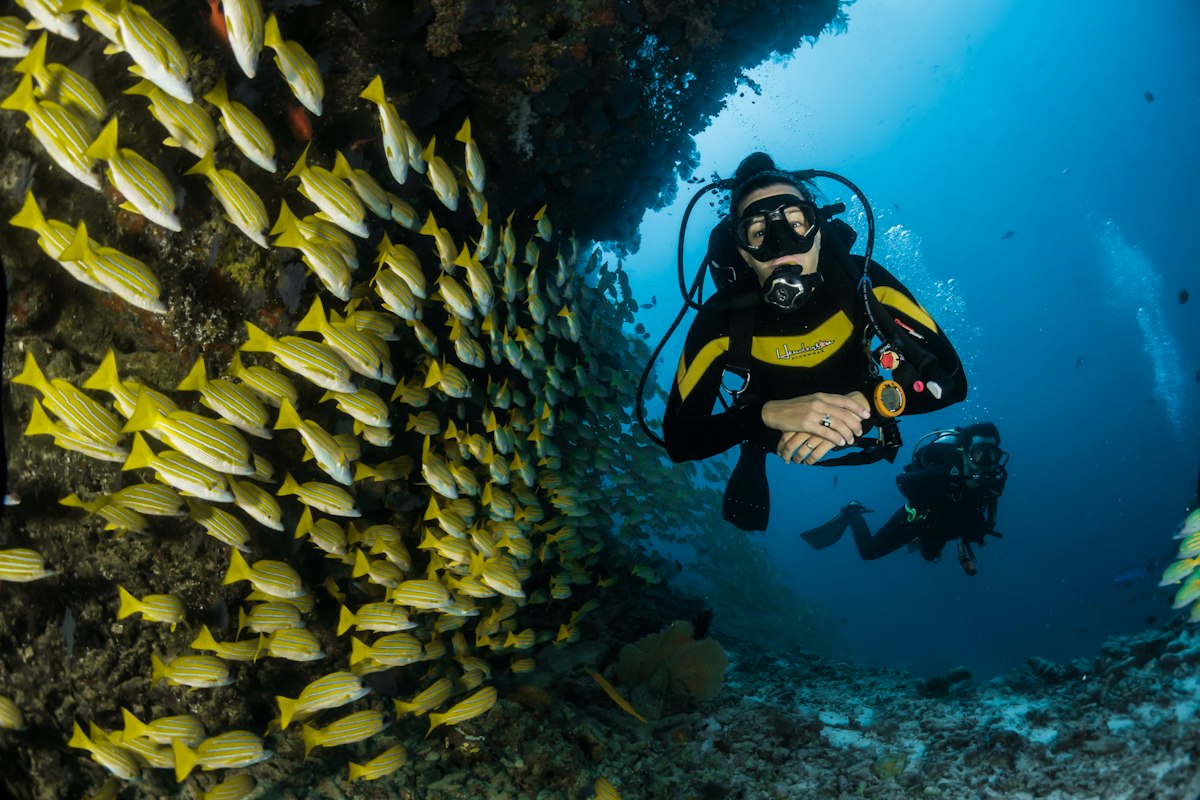
Jeddah's biggest surprise for me wasn't on land—it was underwater. The Red Sea is one of the world's most biodiverse marine ecosystems, and Saudi Arabia's coast remains largely pristine compared to more developed regions. I'd done some diving in Southeast Asia and the Caribbean, but nothing prepared me for the Red Sea's clarity and color.
I booked a two-day diving trip through a local operator called Deep Blue Red Sea. Our group was small—just four divers plus the instructor, Ahmed, who'd been diving these waters his entire life. We headed to sites off Obhur, about 30 kilometers north of Jeddah.
The first dive was at a site Ahmed called "The Gardens." As I descended through water so clear it felt like flying, I understood the name. The coral formations below were intact, vibrant, alive—table corals, brain corals, soft corals in purples and oranges I didn't know nature produced. Fish swarmed everywhere: parrotfish, butterflyfish, groupers the size of small cars, and schools of smaller fish that moved like liquid silver.
On the second day, we dove a shipwreck—the remnants of a cargo vessel that sank in the 1980s. It's been colonized completely by marine life, transformed from human artifact to coral reef. Swimming through the holds while fish darted around me, I felt that particular peace that only comes underwater, where your breathing is the only sound and the world's problems exist in a different atmosphere entirely.
Diving the Red Sea
- Best diving season: March to June and September to November
- Water temperature ranges from 21°C (70°F) in winter to 28°C (82°F) in summer
- Multiple dive operators in Jeddah offering courses and trips
- PADI certification recommended but not always required for introductory dives
- Snorkeling options available for non-divers
- Respect coral—never touch or stand on reefs
The Corniche: Where Jeddah Breathes
The Jeddah Corniche stretches for 30 kilometers along the Red Sea coast, and it's where the city comes to exhale. I ran it most mornings, starting at dawn when the air was cool and the light turned the water various shades of blue and gold. By the time I finished, families would be arriving for breakfast picnics, workers heading to offices, fishermen checking their lines.
The Corniche isn't one continuous strip—it's a series of distinct areas, each with its own character. There's the sculpture garden with its outdoor art installations, some beautiful, some bizarre. There's the floating mosque that appears to sit directly on the water at high tide. There are beaches and parks, high-end hotels and simple tea shops, all coexisting along this interface between land and sea.
One evening, I sat at a corniche cafe with a group of young Saudis I'd met at my hotel. They were in their twenties, university students and young professionals, and they wanted to talk about everything—politics, religion, travel, movies, music. One woman, Sara, asked me bluntly: "What did you expect before you came here?"
I admitted I'd had stereotypes—images of strict conservatism, gender segregation, limited freedoms. She nodded. "And now?"
"It's more complicated than I imagined," I said. "Everything is."
She smiled. "That's good. Simple is boring. Complicated is real."
Eating Jeddah
Jeddah's food scene reflects its history as a crossroads. You'll find pure Saudi cuisine, yes, but also influences from Yemen, India, Lebanon, Egypt, and beyond. My favorite discoveries came from small places that had no English menus and served one or two dishes perfectly.
At a hole-in-the-wall place in Al-Balad called Abu Zaid, I had the best ful medames of my life—slow-cooked fava beans with olive oil, cumin, and fresh vegetables, scooped up with hot flatbread. It cost almost nothing and tasted like someone's grandmother had been perfecting the recipe for decades. The owner, a man in his sixties, spoke no English but understood my gestures of appreciation, responding with a smile and an extra piece of bread.
For seafood, I was directed to the fish market near the southern corniche. You buy fresh fish directly from the catch, then take it to one of the nearby restaurants where they'll cook it however you want. I chose a grouper that had been swimming an hour earlier, and they grilled it simply with lemon and herbs. Eating it at a plastic table with the sea breeze in my face and boats bobbing in the harbor, I understood why coastal cultures worldwide develop such deep connections to the ocean.
The New Jeddah
Jeddah is modernizing rapidly, like everywhere in Saudi Arabia, but it feels different here—less a break with the past than an evolution. The old and new coexist more comfortably than in Riyadh.
I visited the King Abdullah Sports City, a massive complex hosting everything from football matches to concerts. The night I went, a popular Lebanese singer was performing to thousands of fans. Young Saudi women sang along, many without hijabs, some in groups, others on dates with young men. This would have been unthinkable a decade ago.
But a few kilometers away, traditional life continues in Al-Balad. The same city contains both realities, and somehow it works. A Jeddah taxi driver named Omar summed it up perfectly: "We've always been the different ones in Saudi Arabia. We've seen too much of the world to be too strict, but we're still Saudi—we know who we are."
Art in Unexpected Places
Jeddah surprised me with its art scene. The city has dozens of public sculptures—some abstract, some figurative, many by internationally recognized artists. The most controversial is probably the large sculptural installation on a central roundabout that local teenagers told me is known as "The Bicycle" even though it looks nothing like a bicycle to my eyes.
But the art that moved me most was in Al-Balad: graffiti and street art that young Saudi artists have been creating on abandoned buildings, with permission from the preservation authorities. One piece showed the traditional rawasheen balconies transforming into tree branches, old and new growth from the same roots. Another depicted an elderly man and a young woman walking in opposite directions through the same doorway—generations passing, traditions continuing.
I met one of the artists, a young woman named Lama, who was photographing her work. "People think street art is Western," she told me. "But we've always decorated our walls—we just called it something else. This is the same impulse, new tools."
Leaving Jeddah
On my last night in Jeddah, I walked the corniche one final time. A wedding celebration was happening on the beach—music, lights, people dancing. Further down, a group of Filipino workers were grilling fish on a portable barbecue. Families picnicked on blankets. Runners passed by. The call to prayer echoed from a nearby mosque, and for those few minutes, everything paused, then resumed.
Jeddah taught me something about Saudi Arabia that I hadn't fully grasped in the desert or even in Riyadh: this country has always been part of larger conversations. The isolation I'd imagined was partly my own ignorance. Jeddah has been connected—to Africa, to Asia, to the wider Islamic world—for centuries. The recent opening to Western tourism isn't creating these connections; it's just making them more visible to people like me.
If you visit only one Saudi city, make it Jeddah. It's the most accessible, the most welcoming, and perhaps the most essentially Saudi in its comfortable contradiction of being both deeply traditional and genuinely cosmopolitan. The city breathes with the rhythm of the Red Sea—ancient, constant, and always in motion.